
Gutter Repair & Replacement in Dallas, GA
Clogged or failing gutters are one of the most common causes of preventable roof-edge and foundation damage we see around Dallas and Paulding County. Overflow soaks fascia, softens decking at the eaves, and dumps water at the slab. iRoofer Contractors — family-owned in Dallas since 2019 — cleans, repairs, realigns, and replaces gutters and downspouts so water leaves the house, not enters it.
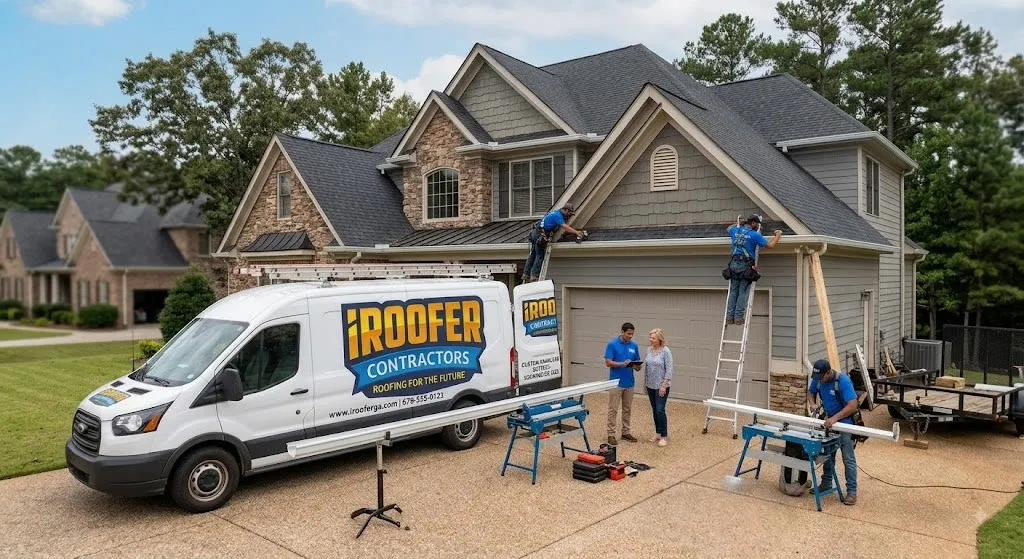
Gutter and roof-edge photos from real jobs
Real photos from iRoofer jobs, shot by our crew. Each caption names the city where the photo was taken.
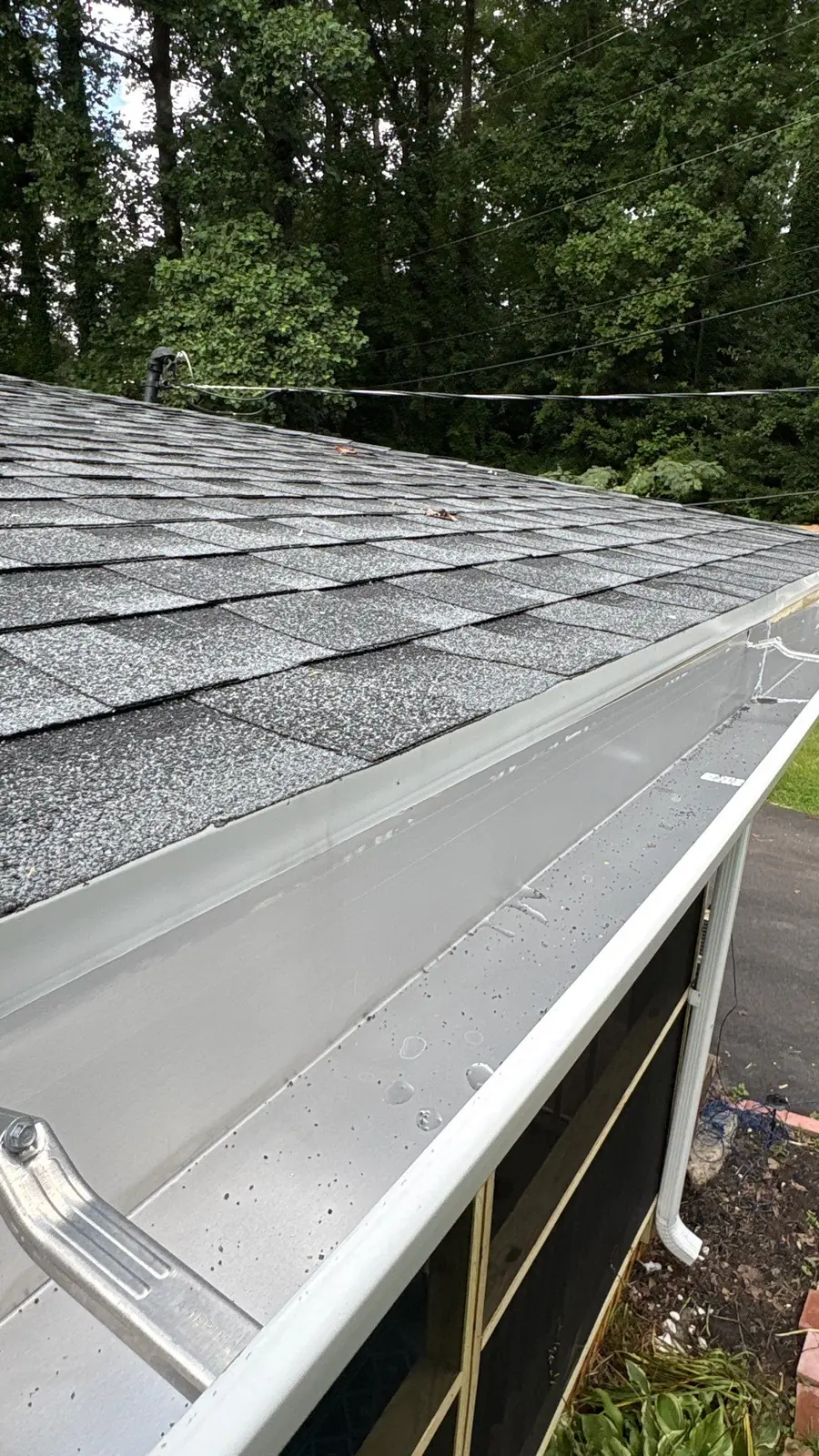
Gutter repair and replacement in Dallas, GA starts with capacity
Undersized 5" runs and too few downspouts overshoot in Georgia downpours even when "clean." We check roof area, fall, and outlets — and tell you if you need 6", more downspouts, or realignment. Seamless aluminum formed on site means fewer leaky joints — the only joints are at corners and outlets.
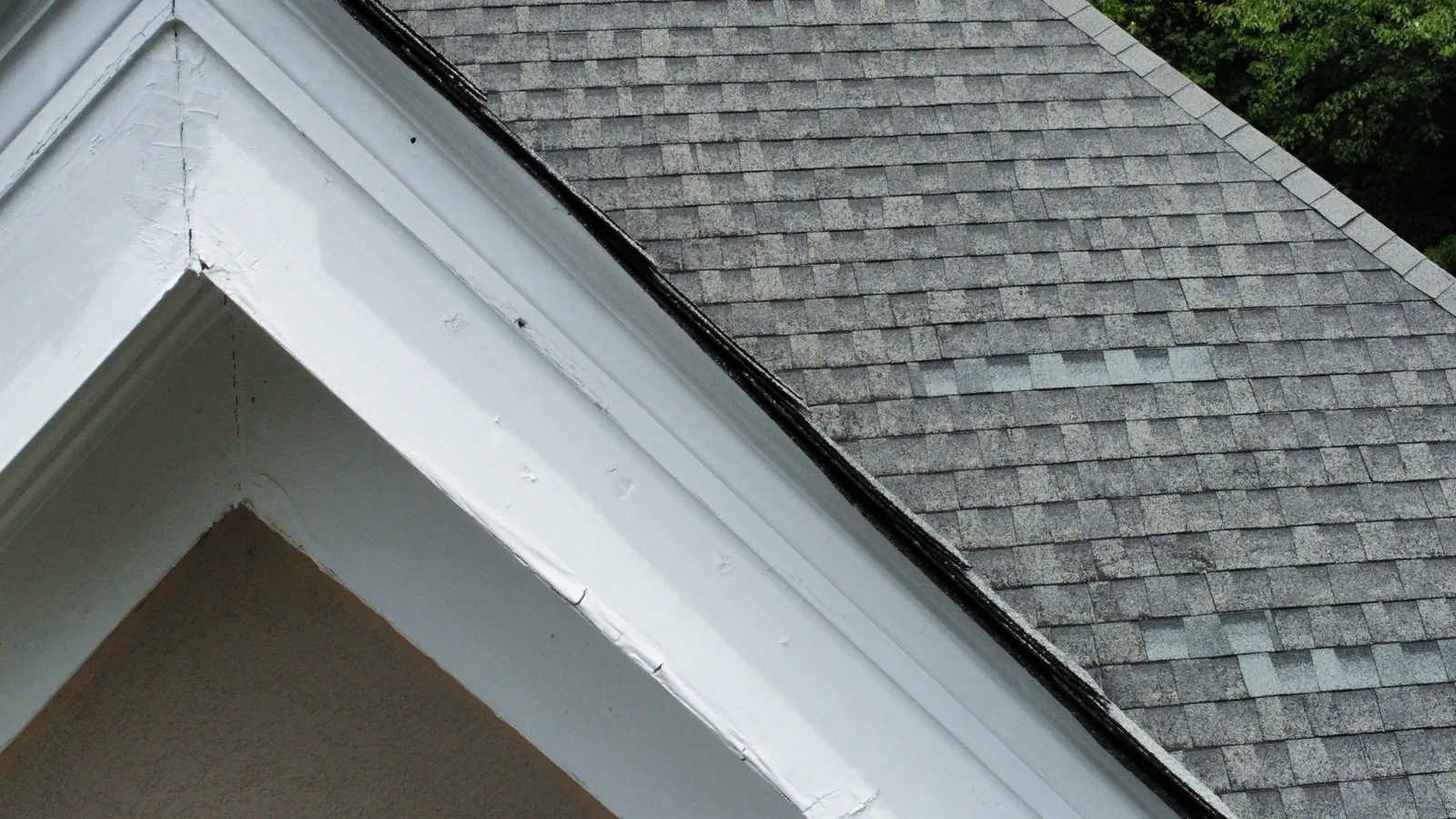
Fascia rot — what it's telling you
Soft fascia is a history of water behind the gutter (missing drip edge, hung above the shingle line). We don't bolt new gutter to rotten wood — we quote fascia separately and fix the detail that caused it. Gutter work does not require a permit in Paulding County, but replacing structural wood may, and we will tell you if your job reaches that point.
How much rain a Dallas gutter has to carry
NOAA's 1991 to 2020 normals for the Atlanta airport put the yearly average at about 50 inches, with July and March the wettest months at close to five inches each. On a roof, each inch over 1,000 square feet of footprint works out to roughly 623 gallons. A summer storm that drops two inches in an hour on a 1,800 square foot house is asking the gutters to move over 2,200 gallons, most of it in a few minutes. That is the test a gutter system in Paulding County has to pass, and it is why we measure instead of guessing.
Dallas houses from the 2000s boom
Dallas is a young town on paper. The Census 2020 to 2024 estimate puts the median year built at 2002, so about half of the houses in the city went up in the last two decades. Many still have the gutters the builder hung, which were often sized for a sales sheet rather than for the roof behind them. As those houses pass twenty years old, we see the same set of problems again and again.
What we find most on 2000s Dallas homes
- Five-inch runs on big two-story roofs, with one downspout covering a whole back elevation.
- Spikes and ferrules that have backed out, so the run sags between fasteners.
- Downspouts that empty onto the driveway or right at the foundation.
- Fascia soft at the corners where the end caps leaked for years.
None of those need a whole new system on their own. We will tell you which ones are a repair and which mean the run is due for replacement.
Repair vs replacement
Loose hangers and minor seams often repair. Chronic overflow, separation, or systemic undersizing → replacement sized correctly. We measure rather than defaulting, then put the recommendation in writing.
Roof + gutter together
Failing gutters soak eaves and can look like a "roof leak." If stains track the perimeter, we check both — see also roof repair in Dallas. Call (470) 236-1410 or contact our Dallas team.
Questions Dallas homeowners ask us
Almost always capacity or fall, not blockage. An undersized run or too few downspouts for the roof area will overshoot in a heavy Georgia downpour regardless of how clear it is.
It depends on the roof area and pitch feeding each run. Six-inch with properly placed downspouts is often the right answer on larger or steeper slopes. We measure rather than defaulting.
They reduce cleaning, they do not eliminate it, and a cheap guard on an undersized gutter makes overflow worse. We will tell you whether yours is a guard problem or a capacity problem.
It has to be addressed — hanging new gutter on rotten fascia fails fast. We quote the fascia work separately so you can see exactly what it is, and we fix the detail that let water behind in the first place.
No, Paulding County requires permits for structural work, not gutters. If replacing rotten structural wood becomes part of the job we will tell you before we start.
Under pines, at least twice a year, once after the spring pollen and needle drop and again after the leaves are down in late fall. In open subdivisions, once a year is often enough.